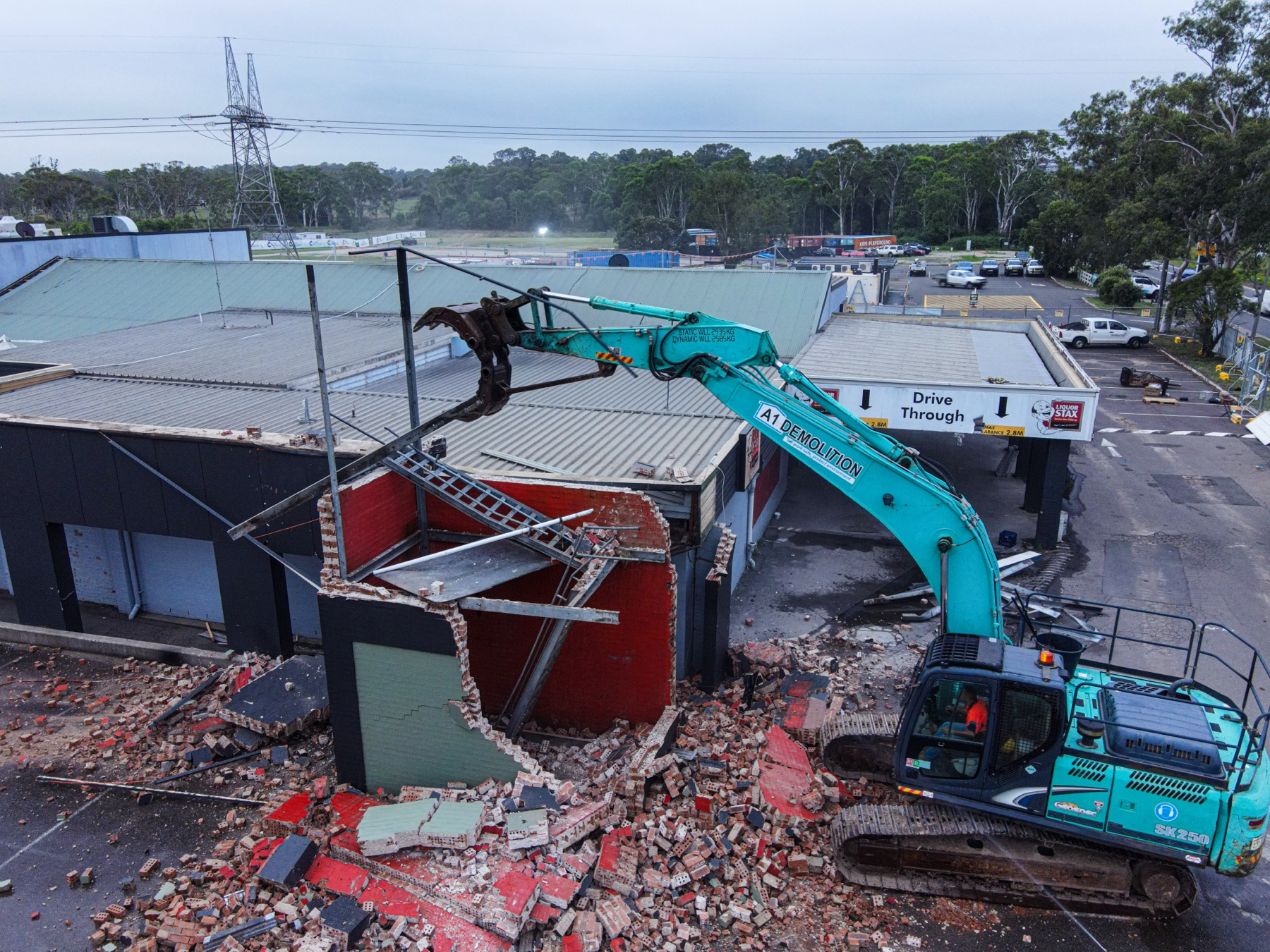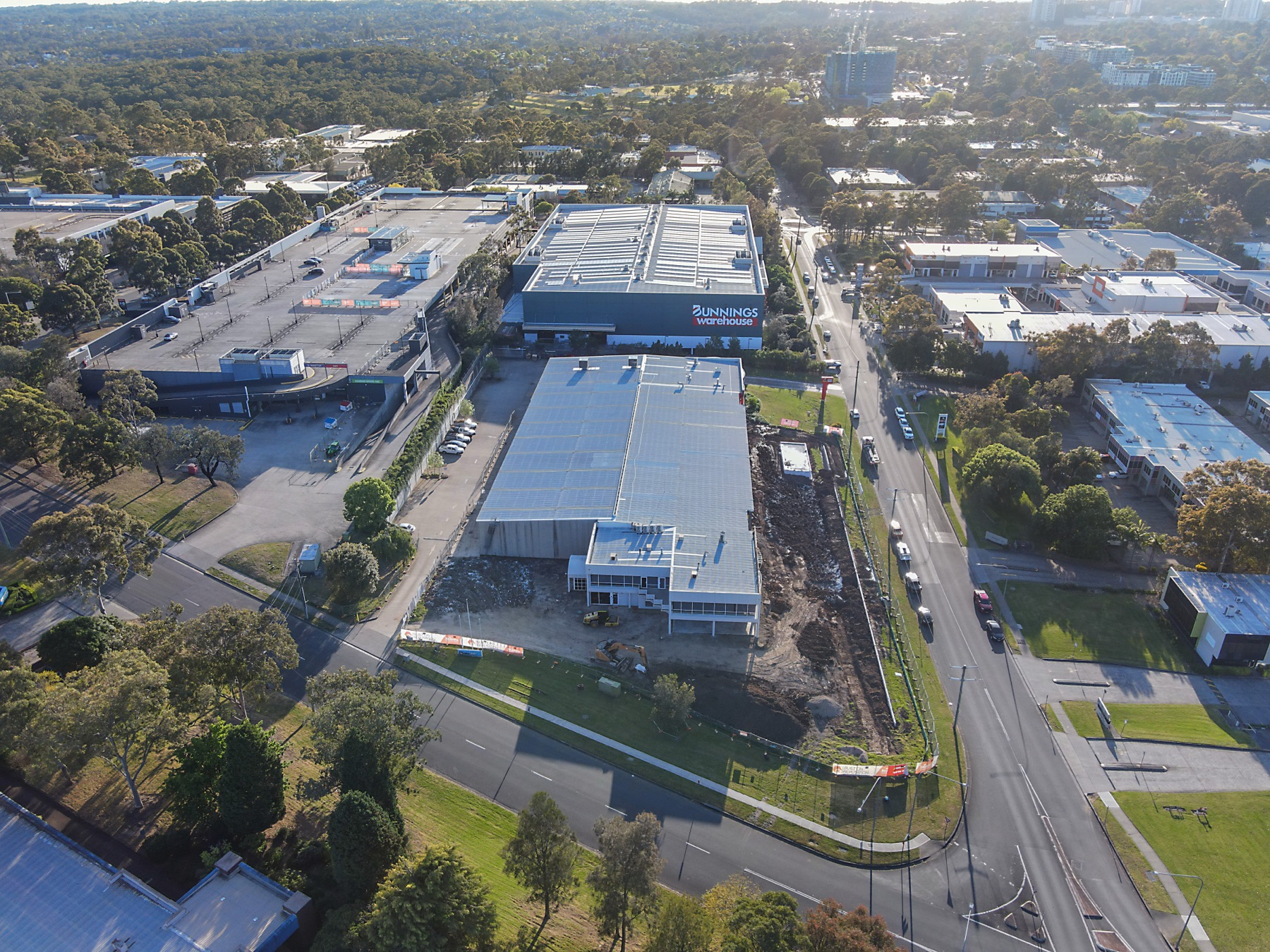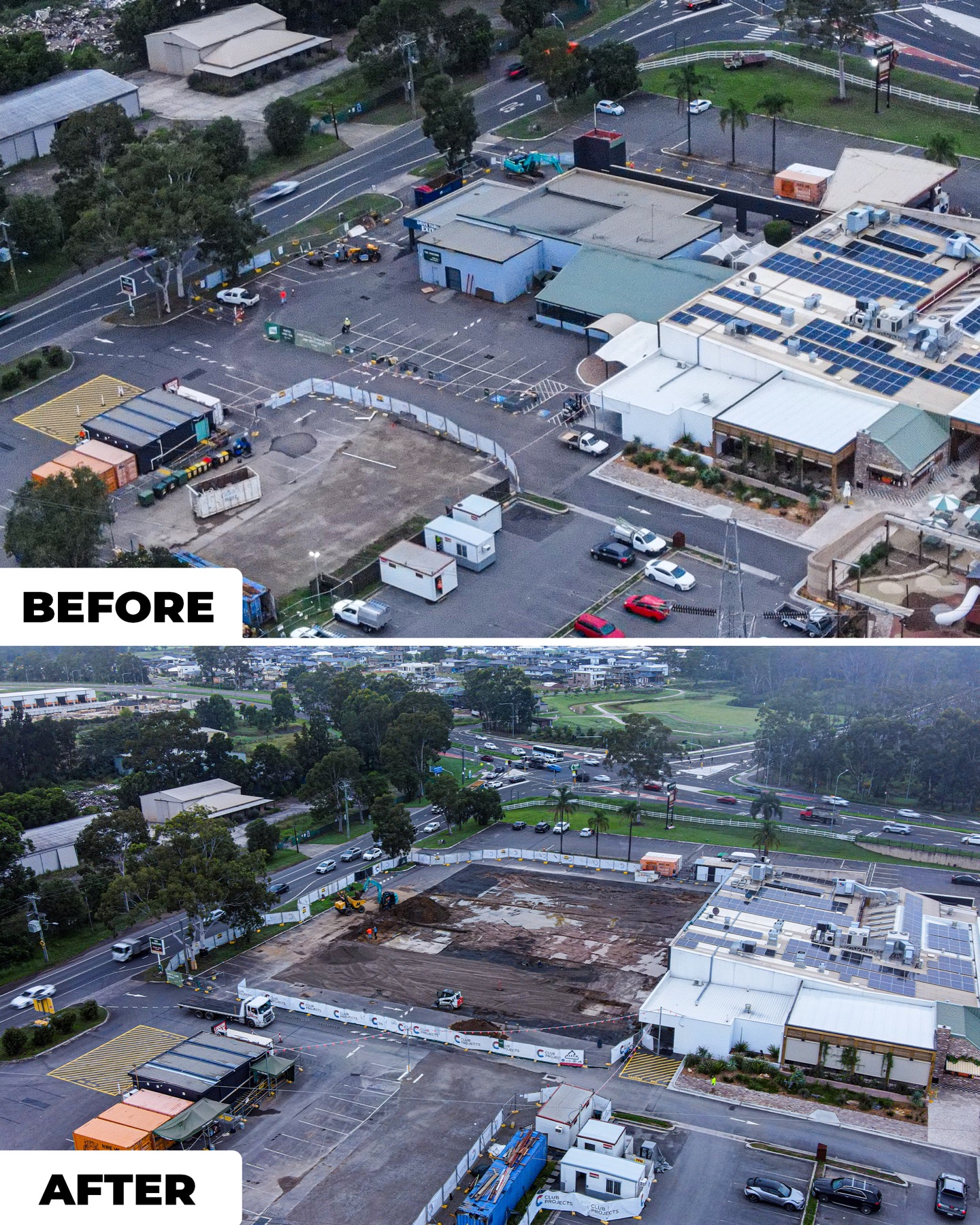
A finished-site photo tells a viewer what a business ended up with. A before and after pair tells them what the business actually did, and that's a very different, much more convincing story. It's the difference between "here's a clear block" and "here's the site that used to be here, and here's what we did to it." For demolition and site clearance work especially, the transformation is the whole point, and a single static shot of the empty result loses almost all of it.
It proves the work rather than describing it
Anyone can write "full site clearance and demolition" in a capability statement. A before and after pair from the same angle removes the need to take that claim on faith. It's evidence, not a description, and evidence is what actually moves a prospective client who's comparing a shortlist of contractors on a tender.
What has to happen on site to make it work
The pair only works if both shots are genuinely comparable, same drone position, same altitude, same angle, ideally similar light. That means the "before" shot has to be planned in from the start of a job, not retrofitted afterwards from whatever happened to be captured. On a multi-stage job, that can mean matching the same flight path at several points through the build, not just the start and the end. On the Windsor Road clearance in Vineyard, that meant a top-down pair and a side-on pair of the same site, before and after.
It works because it's honest
The other reason this format performs well is that it doesn't oversell anything. It's not a stylised hero shot, it's a straightforward comparison a viewer can verify with their own eyes in about two seconds. For an industry where trust and proof of capability matter more than polish, that plainness is exactly what makes it effective.